Global Events
Global MTCC Network Global Event “Decarbonising Together: Global MTCC Network Workshop on Inclusive Maritime Decarbonisation”
Funded by the EU and implemented by the IMO, GMN II project supports developing countries, particularly LDCs and SIDS, through technical cooperation, capacity building and pilot demonstrations for maritime decarbonisation.
Executive Summary
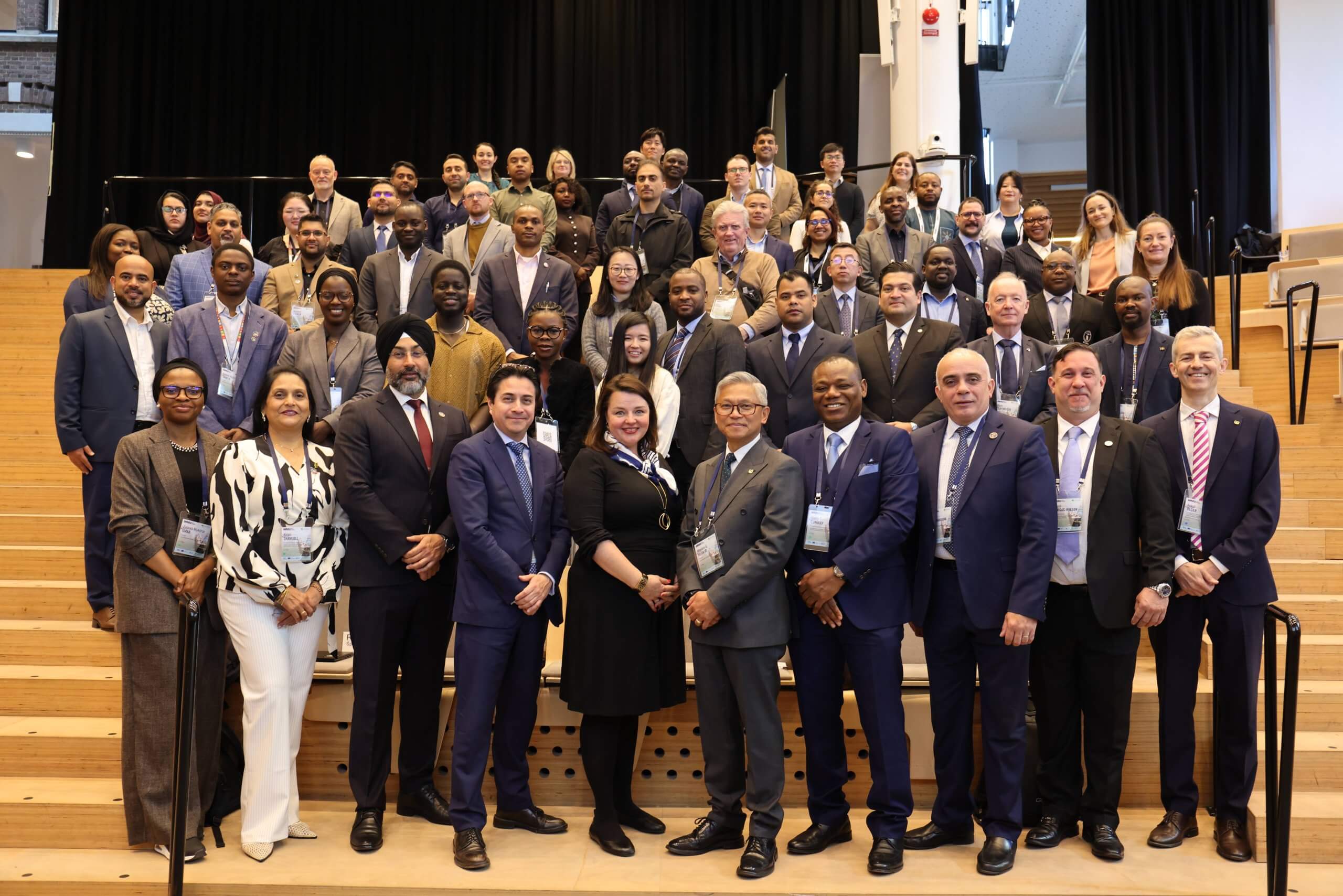
The GMN Global Event – “Decarbonising Together: Global MTCC Network Workshop on Inclusive Maritime Decarbonisation” – was held from 6 to 8 May 2026 at the World Maritime University in Malmö, Sweden. The event brought together more than 80 participants from 33 organisations, including Maritime Technology Cooperation Centres (MTCCs), maritime administrations, global stakeholders and academia, to strengthen collaboration under Global Maritime Network (GMN) Phase II project in support of the 2023 IMO GHG Strategy.
Funded by the European Union and implemented by the International Maritime Organization (IMO), GMN II supports developing countries, in particular Least Developed Countries (LDCs) and Small Island Developing States (SIDS), through technical cooperation, capacity building and pilot demonstrations to improve energy efficiency and reduce greenhouse gas emissions from maritime transport. The event provided a platform to review project progress, align strategic priorities and exchange views on regional delivery, financing, technology transfer, capacity building and inclusive maritime decarbonisation.
Discussions highlighted a shared commitment to advancing maritime decarbonisation through regional cooperation, practical implementation and stronger partnerships. Common priorities included access to finance, bankable projects, technology transfer, workforce development, public-private collaboration and inclusive approaches that support developing countries and integrate gender considerations.
Overall, the GMN Global Event strengthened collaboration across the GMN network and generated valuable inputs to inform the future direction of GMN II and the IMO’s technical support under Climate action and Clean air theme.
Event at a Glance
Held from 6 to 8 May 2026 at the World Maritime University (WMU) in Malmö, Sweden, the GMN Global Event convened more than 80 participants from 33 organisations under the GMN II project. Participants included MTCCs, maritime administrations, global stakeholders, academia and WMU postgraduate students, reflecting the event’s broad and inclusive reach.
Across three days, the event combined coordination meetings, technical sessions, panel discussions and breakout groups focused on inclusive maritime decarbonisation, including financing, industry collaboration, gender integration, skills development and regional priorities for future action.
Snapshot
- Event: GMN Global Event – Decarbonising Together: Global MTCC Network Workshop on Inclusive Maritime Decarbonisation
- Dates: 6–8 May 2026
- Venue: World Maritime University (WMU), Malmö, Sweden
- Convened under: Global MTCC Network (GMN) Phase II project
- Implemented by: International Maritime Organization (IMO)
- Funded by: European Union
- Participation: 80+ participants from 33 organisations
- Participants included: MTCCs, maritime administrations, global stakeholders, academia and WMU postgraduate students
- Main focus areas: maritime decarbonisation, financing, industry engagement, gender integration, skills and workforce development, and regional priorities for future action
Why the Event Mattered
The GMN Global Event provided a timely opportunity to bring together regional and global stakeholders to take stock of progress, strengthen coordination and align priorities on inclusive maritime decarbonisation. At a time when countries are working to translate international ambition into practical action, the event created space for dialogue on how regional implementation can better support global objectives while responding to different national and regional contexts.
The workshop was particularly important in highlighting that maritime decarbonisation is not only a regulatory or technical challenge, but also a development and capacity-building issue. Discussions reinforced the need for practical support to help developing countries, in particular LDCs and SIDS, participate effectively in the transition and avoid being left behind.
The event also demonstrated the value of the GMN framework in promoting shared learning, stronger partnerships and more consistent approaches across regions.
In addition, the event highlighted several enabling factors that will be critical to accelerating progress, including access to finance, technology transfer, stronger public-private collaboration, workforce development and inclusive approaches that integrate gender considerations. The discussions showed that while many solutions already exist, greater coordination, investment and capacity support are needed to scale them effectively.
Overall, the event mattered because it helped translate ambition into practical dialogue on implementation and support needs across regions.
Key Outcomes
The event highlighted the following key outcomes:
- Stronger coordination across the GMN network through direct exchange among MTCCs, IMO, the European Commission and other stakeholders.
- Improved alignment with the 2023 IMO GHG Strategy and greater clarity on how regional action can support global objectives.
- Shared priorities identified across regions, including capacity building, technology transfer, financing and public-private partnerships.
- Regional inputs on, key challenges, opportunities and implementation needs.
- Reinforced focus on inclusion, particularly support for SIDS and LDCs, gender integration and workforce development.
- Stronger partnerships and shared learning to support practical implementation under GMN Phase II.
Main Discussion Themes
Across the three days, discussions focused on key themes central to advancing inclusive maritime decarbonisation. Common messages included the importance of practical implementation, stronger partnerships, targeted capacity support and coordinated regional action.
Maritime Decarbonisation and Global Alignment
A central message throughout the event was that maritime decarbonisation requires both global coordination and region-specific implementation. Participants emphasised the importance of aligning regional efforts with the 2023 IMO GHG Strategy while ensuring that countries are supported in translating global ambition into practical action. Discussions also highlighted the need for inclusive approaches that reflect different national circumstances and levels of readiness.
Regional Implementation through the GMN Network
Regional exchanges demonstrated that maritime decarbonisation is already progressing in different contexts, with MTCCs helping to translate policy discussions into practical initiatives. The discussions also highlighted the value of sharing experience and replicating good practices across regions.
Financing and Investment Readiness
Financing emerged as a critical cross-cutting theme. Participants highlighted the importance of improving access to finance, strengthening national coordination and developing bankable, investment-ready projects that can attract both public and private support. Discussions also underscored the need to better understand country-specific contexts in order to design realistic and effective pathways for investment in maritime decarbonisation.
Industry Engagement and Partnerships
The event highlighted the important role of industry alliances, coalitions and broader public-private collaboration in accelerating implementation. Participants noted that effective partnerships require clear objectives, sustained coordination and adequate resources. Industry engagement was seen as particularly valuable in helping connect policy, technology, operational experience and investment opportunities.
Inclusion, Gender and Just Transition
Inclusion was recognised as an essential component of maritime decarbonisation. Discussions drew attention to the need to ensure that developing countries, particularly SIDS and LDCs, are not left behind in the transition. The event also highlighted the importance of integrating gender considerations into planning and implementation, while expanding access to training and opportunities across the maritime sector.
Skills, Training and Workforce Development
Participants stressed that technological change must be matched by investment in people. The discussions highlighted the need for strengthened education and training systems, updated skills development approaches and greater support for maritime training institutions. Building a workforce that is equipped to adapt to emerging technologies, alternative fuels and new safety requirements was seen as essential to a successful transition.
Breakout Discussions and Regional Priorities
Breakout discussions were an important feature of the event, generating practical inputs for future implementation under GMN Phase II. Common themes included stronger coordination, capacity building, public-private collaboration and improved access to sustainable financing. These discussions provided valuable inputs to inform the GMN Roadmap.
Next Steps
The outcomes of the GMN Global Event will help inform future work under GMN Phase II and technical support under the thematic area of Climate action and Clean air.. The event also reinforced the importance of sustained regional coordination, targeted capacity support and practical follow-up action.
Future efforts will need to continue focusing on key enabling areas such as financing, technology transfer, public-private collaboration, gender integration and workforce development. Maintaining strong partnerships and shared learning across the network will be essential to supporting effective and inclusive implementation going forward.
For more detailed report of the event including presentations, photos and feedback, please click here: GMN Global Event Report